Cambridgeshire
Police
History
Notes
CambridgeshirePoliceHistoryNotes |
|
|
|
Locations Balsham
|
The Journal of the New Cambridge Police 1837-8| Introduction | Policing Cambridge in the1830s | The Cambridge Station House | Transcripts | Analysis | Journal Content | Borough Police Regs | Watch Committee Report 1836 | Cast List | Policing in Cambridge in the 1830sIn the mid 1830s the population of Cambridge was around 24,000. The general appearance of the town (independent of the University) was described as:
The 1830s were years of reform. The Reform Act of 1832, a landmark piece of legislation, aimed to rectify the corrupt parliamentary electoral system and provide a fairer representation of the population in Parliament. Continuing the reform process, Cambridge was one of many towns visited and examined in 1833 by Commissioners appointed by Parliament to enquire into the Municipal Corporations of England and Wales. The Times reported on the Commissioners overall findings at Cambridge (16 November 1833 p2):
The Commissioners found that the policing of the Borough of Cambridge was complex, fragmented, inefficient and none too effective. In detail the Commissioners recorded:
This overview omitted the possibility that serving as a constable might be avoided by those who could afford to pay a substitute to serve in their place. At least one example of this can be found from a study of the local press. A very active and intrepid individual, Faiers, served as a constable continuously from 1831 to 1837. Also omitted from the overview of policing were the Proctors, University Officials appointed annually, who, with their servants patrolled the town during term time to deal with disorderly undergraduates. They also acted to maintain moral standards by removing common prostitutes from the streets and taking them to the Spinning House, where they could be incarcerated by the Vice Chancellor. The Commissioners recorded a number of policing failures in the Borough:
The need for improvement in policing, highlighted by the Commissioners, was also becoming obvious to local people. For example, on Saturday 22 November 1834, Alderman Charles Humfrey was assaulted and robbed of a purse and cash by two ruffians in Emmanuel Lane near his home. Humfrey, a rich and influential builder, architect, developer and banker, was one of 109 residents who signed an open letter to the Mayor, urging him to establish a regular and efficient police and watch to protect the persons and property of the inhabitants of the town. The Mayor, Alderman Thrower, responded by calling a meeting of householders on 4 December 1834 at the Town Hall, to consider implementing this proposal. (Cambridge Chronicle, 28 November 1834, Pp2 and 3). At the meeting a committee was formed to establish a regular and efficient police force. The only surviving evidence of the committee’s work is a notice published in the Cambridge Chronicle 6 November 1835 p1, announcing that an application would be made to use part of the House of Correction (Spinning House) in St Andrew’s Street, as a police office for the Borough. As the House of Correction was a charitable institution (Hobson’s Charity) this required an application to Parliament for an Act. This local initiative was overtaken by national events. The Municipal Corporations Commissioners published their report into the governance of 285 towns, as a result of which Parliament passed the Municipal Corporations Act (5 and 6 William IV C.76) on 9th September 1835. This Act introduced major reform to the local government of boroughs in England and Wales. New town corporations were to be elected by a much enlarged electorate. Professionalism and transparency were to be improved by the appointment of salaried clerks and treasurers who were not council members. The new councils’ accounts were subject to audit. Borough elections in Cambridge took place in 1835 and the Tories lost control over the Corporation to the Reform Party. The new Cambridge Borough Watch Committee met on 11th February 1836. The Committee comprised The Mayor, Mr Alderman Humfrey, Mr Alderman Anderson, Mr Alderman Simpson, Mr Alderman Grafton, Mr Hallack, Mr Thomas Nutter, Mr Headley, Mr Coe, Mr Francis Eaden, Mr Warren, Mr Patrick Beale and Mr Searle (Borough Council Minutes 11 January 1836). The Committee decided to establish a single police force rather than separate forces for the day and the night. The press reported:
The establishment in fact included an additional four sergeants. It is not known whether this omission was due to inaccurate reporting or an afterthought by the Watch Committee. Later Council Minutes show the Superintendent was paid a salary of £170 per annum, Inspectors an annual salary of £65, Sergeants were paid £1.0.0. and Constables 16s per week (17s from Jan 1837). In addition the Watch Committee provided a house for the Superintendent and one of the Sergeants was provided with accommodation at the Station House. The gentleman sent to advise by Colonel Rowan, Commissioner of the newly formed Metropolitan Police, was John Titterton (1787-1857). John had served in the ranks in the military for some 21 years before joining the Metropolitan Police as an Inspector in 1829. John was next in line in his division for promotion to Superintendent. He so impressed the Watch Committee that they engaged him as the Superintendent leading their new force. The “machinery of a clock description” refers to a watchman’s clock, a device carried by a watchman which recorded his location at different times by the insertion of keys secured at different places on his “beat”. This idea was not implemented by the Watch Committee. The Watch Committee acted promptly to establish their new force. Officers, aged between 21 and 40 years and 5ft 7in or taller, were selected on account of their honesty, sobriety, activity and fitness. An interesting revelation in the Cambridge Chronicle (21 October 1837) suggests that the staff selection process may have prized speed above rigour. PC Joseph Ryder prosecuted 23 year old Edward Snarey for violently assaulting him and the court permitted the defence to quiz PC Ryder about his political leanings and background. Ryder stated that he had been tried a year earlier for embezzling money, and sentenced to a term of imprisonment, and that seven weeks after he came out of gaol he was made a police-constable. ( Cambridge Chronicle 21 October 1837, 15 January 1836, 25 March 1836) On the day after the Watch Committee’s first meeting, tenders were invited from tradesmen for the supply of uniforms and a sample uniform, as worn by the Metropolitan Police, was available to interested suppliers just three days later. The uniform supplied to the men comprised a greatcoat, cape, badge, coat, trousers, boots, hat, cover for hat, a stock, and an embroidered collar. (Cambridge Chronicle 12 February 1836). All ranks, including the Superintendent, were provided with uniforms. The Superintendent’s suit had a rich gilt breast. In addition to uniforms, the Watch Committee provided essential equipment for the men: rattles, lanterns, batons and account (pocket) books. The Borough Council’s Orders upon the Treasurer, 4 August 1836 included:
J.J.Cribb, surgeon, was appointed by the Watch Committee to provide any medicines or medical attention required by the policemen. Constables were expected to see the surgeon if they were unfit for duty. Not listed by the press, but included among the uniform items, was an armlet, worn to show that an officer was on duty. On 1 October 1837 the Superintendent found Pc Bidwell gossiping on the Market Square and not wearing his armlet. In another entry in the Journal, 20 February 1838, the Superintendent tried to establish the identity of an officer who reportedly removed his armlet on entering a public house in Barnwell, concealing the fact that he was on duty. Despite the difficulties of finding accommodation and recruiting and equipping a new police force, the Watch Committee moved forward with remarkable speed. The Cambridge Chronicle 6 May 1836 Page 2 carried an announcement in the name of John Titterton, Superintendent:
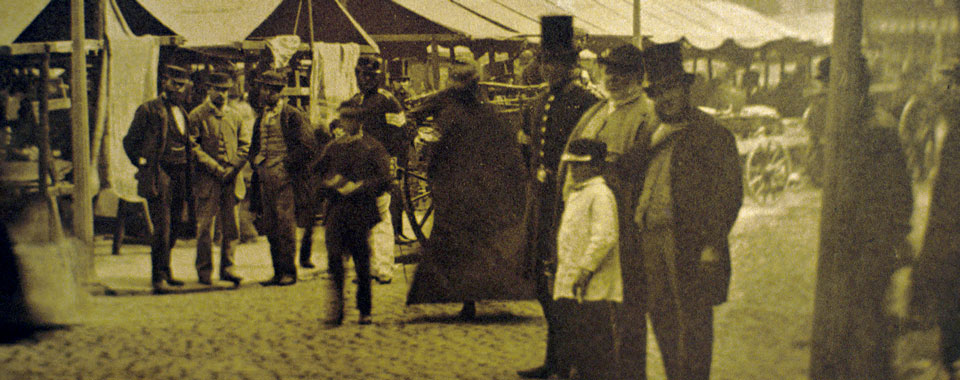
New police patrolling the town in uniform would have been a visible public statement that there had been changes to the Borough Corporation. This may have been a factor behind the rapid pace of progress made by the Watch Committee. By the time the Watch Committee sent their Michaelmas report to the Secretary of State in October 1836, they had also passed regulations for constables and sergeants and had organized the men into sections and defined and allocated posts and beats (GBR/0265/UA/CUR37.5 item 12. Under the Watch Committee’s Regulations (see below), Constables were required to wear their uniform at all times (R.5). There are only one two examples in the Journal of officers working in plain clothes. On 27 March 1838 half the men were told to report in plain clothes to take part in a sweep through the town to arrest all beggars. On 14 April 1838 two Constables were deployed by the Superintendent in plain clothes at the Corn Market to keep observations for pickpockets, resulting in two arrests. No records have been found for the purchase of any weaponry for the Force, other than staves. There is no mention of the purchase of firearms, cutlasses or handcuffs, or of the men undertaking cutlass drill. One reference during this period to the police use of firearms has been found. In August 1837 John Titterton was criticised in the press for producing two loaded pistols in a public house when he arrested William Horobin, wanted for a serious assault on one of the Constables during the Maberly Riot. Later Horobin was conveyed to court in handcuffs. (Cambridge Chronicle 26 August 1837 p2). Given the Superintendent’s military background, it is possible that the pistols may have been his own property. The local press long remembered the incident and on 20 April 1839 p2 the Cambridge Chronicle sneered;
There is no mention in the Journal of the Force having any transport. On those occasions when officers went to other parts of the County they probably hired a mount or a fly from a local stable or used the network of stage coaches between principal towns. The only transport related equipment provided by the Watch Committee was a stretcher, kept at the Station House. On 17 August 1837 there is a Journal entry to the effect that Sgt Smith and others conveyed an injured man by stretcher from Midsummer Common to Addenbrooke’s Hospital after he had been kicked in the face by a horse. The stretcher was used by two of the Constables on 10 January 1838 to carry a man who had broken his leg on the ice from Cambridge Place to the Hospital. On 9 February 1838 the stretcher was used for another purpose. A prisoner, arrested for being drunk and disorderly, was being stretchered to the Station House by two Constables when he managed to undo the stretcher’s restraining straps and escape.
An officer on the Cambridge Market Place, armlet visible. Reproduced with the kind permission of the Cambridgeshire Collection |
|
This page was last modified: 24 July 2025, 10:31
This site is powered by Web Wiz Green Hosting. We have been using their services for many years and are more than happy to recommend them to you. www.arumgo.com is a non-commercial web site currently containing material for police historians or those interested in local and family history. The site name was chosen for a place intended to be a shoe-box in which to store interesting things that make life in Silicon Fen of the 21st Century such arumgo 'Well, Sam,' said Mr. Pickwick, 'I intend to record all the interesting things we encounter in this journal'. 'That's rayther a rum go Sir,' replied Sam. |