|
Home
Biographies
Locations
Balsham
Bassingbourn
Cambridge
Cottenham
Fen Ditton
Gt and Lt Shelford
Haddenham
Littleport
Peterborough
St Ives
Soham
Wisbech
Links and thanks
|
The Journal of the New Cambridge Police 1837-8
| Introduction | Policing Cambridge in the1830s | The Cambridge Station House | Transcripts | Analysis | Journal Content | Borough Police Regs | Watch Committee Report 1836 | Cast List |
Journal Content
This page attempts to derive some meaning from the 2,500 entries in the journal.
DEPLOYMENT, WORKING OF BEATS AND PERSONNEL ISSUES
DISCIPLINE
ORDERS FOR THE MEN
CRIME
ARRESTS AND PRISONERS
LICENSED PREMISES
STREET LIGHTING AND CLEANSING
VAGRANTS AND BEGGARS
PUBLIC ORDER
SUDDEN DEATHS
TOWN AND GOWN INCIDENTS AND DEALING WITH COLLEGIANS
HIGHWAYS
PROPERTY
DOMESTIC VIOLENCE
PUBLIC ACCEPTANCE OF THE NEW POLICE
INVOLVEMENT OF THE WATCH COMMITTEE IN OPERATIONAL MATTERS
SPRINGING A RATTLE
MINOR NUISANCES
ANIMALS
PROSTITUTES
FIRES
GENERAL WELFARE ROLE IN THE COMMUNITY
DEPLOYMENT, WORKING OF BEATS AND PERSONNEL ISSUES
Featuring strongly in the journal are day to day deployments (189 instances), briefings (74), management (95), discipline (205) and equiping (14) of the officers of the Force. Some, but not all, of the discipline entries show the outcomes for the officers. From 8 January 1838 the journal caries a daily matrix of the officers allocated to the day shifts, their working hours and any special duties they were required to perform. Generally these show a rotation with four constables allocated each week to the day shifts, the remainder to night duty, with change-over on Monday/Tuesday. Individual Constables would therefore have worked a six week rota with a week of day shifts followed by five weeks of night shifts. Day shifts were usually 9am to 9pm, night shifts 9pm to 9am, but the Watch Committee’s Regulations make it clear that the men were required to devote their whole time to the Police Service and there are occasional references to the night shift attending 3 pm parades.
In 1836 the Watch Committee listed 18 beats to be patrolled. Each beat started with a specific post, a location to which the Sergeants would walk the officer. A beat was so designed that every part of it could be patrolled in half an hour. This meant that, in theory, anyone requiring a Constable needed only to remain in one spot and, in no longer than 30 minutes, would encounter an officer. This presupposed that every beat was manned and that officers were continually on the move without interruption. The Journal does not give any information on the allocation of individual Constables to specific beats, either when all the men were on duty or when there were staffing gaps. The details of the beats can be found in the Watch Committee's Michaelmas 1836 Report to the Secretary of State.
Top of page
DISCIPLINE
Only a few entries relate to hiring, firing and turnover of officers. The journal mentions 44 different named officers across the 33 posts in the force, suggesting one in four officers left the force or were dismissed during the 14 months covered by the journal.
Entries in the Journal record that officers were “required to report” for a wide range of discipline offences. These included being late for duty, leaving their beat, drinking on duty, sleeping on duty, consorting with prostitutes, incivility to the public, gossiping, losing equipment and not caring for their uniform.
On occasions individual members of the Watch Committee reported disciplinary breaches by the men which they had observed e.g. Mr Searle reported PC Benton for gossiping on 15 December 1837. More usually officers were reported by the Sergeants, Inspectors or the Superintendent for any disciplinary offences observed. The Superintendent had the power to close down a report if the PC gave an acceptable explanation or to impose minor penalties such as admonishments. The Journal was overseen at its weekly Tuesday meetings by the Watch Committee, which dealt with all of the more serious reports.
The Watch Committee had powers to dismiss, even without stating cause, but exercised a degree of discretion. Typical outcomes, where officers failed to give a satisfactory account of their actions, were admonishments, small fines or loss of pay. In a debate at the Town Council in February 1839 on the cost of the Police, Councillor Barker stated that in the three years up to February 1839, the total number of disciplinary reports to the Watch Committee was 427. We have no data setting out the punishments ordered. In the same Council meeting it was alleged that one constable, English Tyler, was reported to the Watch Committee no fewer than 27 times before he was dismissed and that Inspector Green had been reported for six different disciplinary matters and was still employed.(Cambridge Chronicle 23 February 1839 p3).
Top of page
ORDERS FOR THE MEN
The Journal was the medium through which the Superintendent addressed the Inspectors and Sergeants on meeting their supervisory responsibilities. He issued a number of directives via the Journal, including:
• increasing supervision of Constables outside the Station House,
• ensuring officers went directly to their beats after parade,
• meeting officers more frequently on their beats,
• making sure the Station House was staffed at all times,
• keeping proper detailed records,
• recording visits to licensed premises and their conduct
• recording the comings and goings at Barnwell lodging houses.
• recording prisoners released after charges refused
• recording the names of the night staff and their times on and off duty
• day men to report to the Inspector at the Station every hour.
Top of page
CRIME
Reports of crime and crime enquiries undertaken account for 288 journal entries. (Names of offences used in this analysis follow more recent definitions from the Theft Act 1968, whereas many of the crime entries in the Journal are simply entitled “robbery”). The majority of the crimes listed were thefts, according to today’s definition. These were mainly opportunist offences, often involving low value items. Occasionally more expensive articles were stolen, for example watches and items of silverware from the rooms of university students, and, on one occasion, a gang of thieves had stolen lead from the roof of a church. Some crimes were of a more rural nature, for example stealing or butchering a sheep or pig. Most of the crimes reported and enquired into were offences occurring in the Borough but 44 offences recorded were from further afield. Occasionally the Superintendent and the Watch Committee would allow an officer to go to a crime outside the Borough to make enquiries. Where this occurred, it was usually an Inspector or a Sergeant entrusted with the job. By 19th March 1838 the Superintendent wrote a warning about this, stating “in consequence of the Police interfering so much with County cases he finds the duty of the Town neglected” and by May 1838 the Force was charging County Parish Constables 2/6d per night for any County prisoners lodged at the Station House.
Very occasionally serious crime allegations were investigated. Examples are:
• the alleged murder, in August 1833, of John Walls, a notorious poacher. This case was brought unsuccessfully to court more than four years after the event, after a witness belatedly claimed to have seen the victim beaten and thrown into a pit at Barnwell (Cambridge Chronicle 17 February 1838)
• the finding of a new born child’s body buried in a garden in Hills Road (17 March 1838), and
• an attempted wife poisoning (20 June 1838 and Cambridge Chronicle 24 June 1837).
Other relatively common offences were acts of criminal damage (58 instances), usually committed during hours of darkness and often attributed to “collegians”.
Only 24 instances were recorded of violent crime / crimes against the person. However, it was almost a daily occurrence for the Force to put a stop to disturbances and fights and many of these incidents would, no doubt, have involved unreported and unrecorded offences against the person.
The relatively low level of reported crime (Around 5 crimes per week over the period covered by the Journal) may, in part, be because the public were unfamiliar with or did not trust the new policing arrangements. There may also have been some degree of under-recording as the Journal includes a number of reminders to the men from the Superintendent about the need for comprehensive and detailed recording of occurrences.
There were just over 200 records of activities related to crime prevention. Mainly these were discoveries during the night by Constables of gates and doors to premises left insecure or window shutters unfastened. The Journal usually records the property owner being called up to secure the premises, and on many occasions thanking the officer. Officers were probably particularly vigilant regarding this type of security, being accountable should they have missed anything on their beat. Finding insecure premises would offer a Constable a break from his foot patrol and an opportunity for socialising. Other crime prevention activities included responding to requests to give particular vulnerable premises extra attention, offering advice and, on one occasion, the use of a tell-tale.
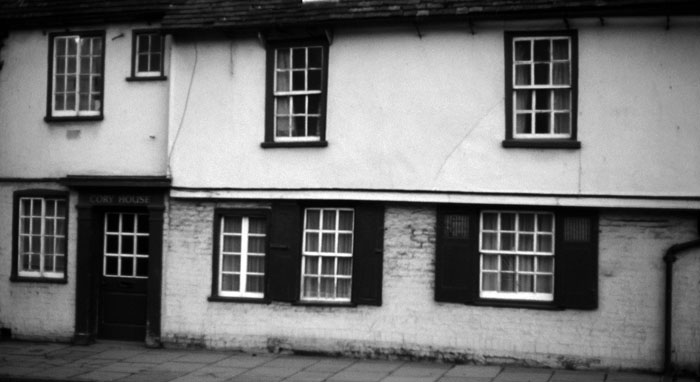
In Victorian times window shutters served a useful purpose reducing crime, but only when secured closed.
The Superintendent encouraged officers to add detail to their reports and numerous Journal entries show that Officers were skilled at describing individuals, their clothing, stolen property and horses, very useful when sharing information with other officers. Journal entries give an idea of some of the skills and techniques Officers of the Force used occasionally to investigate crime. These included:
- recording the names of vagrants in the cheapest lodging houses in Barnwell and how each of them earned a living (Journal entry 25 March 1837)
- recording late closures of licensed premises, as those leaving could be witnesses or even perpetrators of night time crimes. (6 September 1837)
- interviewing witnesses to get a detailed first-hand account of the offender or offenders if seen (10 April 1837)
- recording anyone seen moving their possessions and changing accommodation overnight (1 April 1837)
- stopping and checking individuals moving about during the night carrying anything (9 April 1837, 19 April 1837)
- examining the scene of the crime for clues (16 April 1837)
- using footmarks to narrow the search for offenders (30 October 1837)
- searching suspect's property, with or without a search warrant, to establishe guilt or innocence (24 April 1837)
- acting on information from informants (29 May 1837)
- identifying possible suspects from individuals of a class or occupation stereotypically linked with criminality, seen near the scene of the crime, or going door to door. Examples: match sellers (14 August 1837), beggars (27 March 1838), sweeps (29 March 1837), dirt men (10 January 1838), cinder / dust / collectors (6 February 1838), scrap and rag and bone collectors (14 September 1837)
- plain clothes observations at times and places where offending likely (14 April 1838)
- visiting pawnbrokers, silversmiths, watchmakers and marine store dealers to enquire about stolen property. (20 December 1837)
- encouraging pawnbrokers to pro-actively notify the Force of anything suspicious (28 April 1837)
- examining clothing for bloodstains (19 November 1837)
- keeping in touch with, or re-interviewing complainants for any additional recollections (28 April 1837)
- showing a suspect to a victim or witness for identification (30 April 1837)
- sharing information with adjoining and other Forces (1 May 1837)
- sharing information with all the officers in the Force by the use of the Station House Journal and parades.
- doggedly tracking identified suspects or offenders (2 June 1837)
- printing and circulating handbills locally and more widely (18 May 1837)
- circulating details of stolen bank notes (11 December 1837)
Mentioned, but no actual examples of use in this Journal:
- Posting notices in the Police Gazette (18 May 1837)
- use of the Town Crier to make announcements and seek information locally
- Use of rewards to gain information. Rewards might be provided by local associations for the prosecution of felons or by individual victims. Nationally the Home Office might offer rewards for the most serious of crimes.
Top of page
ARRESTS AND PRISONERS
The journal is not very helpful regarding arrests as it was not the main place for recording charges. There were only 44 journal entries whose main information was about a prisoner. This number grows to 127 when other entries implying an arrest are taken into account. However, this is a small fraction of the claimed 1192 prisoners per year put before the magistrates and reported in the Watch Committee’s Report to the Secretary of State for Feb 1836-Feb 1837. (Cambridge Chronicle 23 September 1837 p.2). The use of a different set of records for charges can be deduced from an instruction to order more charge sheets from the printer (21 May 1837), making sure the charge sheets were produced at court with prisoners (20 October 1837), and mention by the Superintendent of the “book of charges” (10th April 1837). It might be expected that the details of all the prisoners not included in this Journal could be found in local press reports. This proves not to be the case as the local weekly newspapers did not routinely record all the business of the petty sessions.
Top of page
LICENSED PREMISES
Records relating to the supervision of licensed premises frequently occur in the journal. There are 83 references by the Superintendent, Inspectors and Sergeants, to public houses and beer shops being checked and found to be in order. In addition there are 171 specific records, mainly by the Constables, of premises being open late into the night or during the hours of divine service or hosting dances and parties. Pre WW1 there were generally no restrictive permitted hours for licensed premises. The exception was a prohibition on Sunday opening during the hours of divine service, and according to the Journal, the Police did initiate proceedings for this offence.
General monitoring of the conduct of licensed premises and beerhouses was required of Constables by the Watch Committee’s Police Regulations (Regulation 22). The Superintendent also expected his men to report late night activities, information which might help with any subsequent enquiries into offences committed overnight.
It is also worth noting that in 1837 and 1838 there was an ongoing legal battle between the Town Magistrates and the Vice Chancellor over who had the power to grant liquor licenses (See the Journal, 29 May 1837, when a licensee used this dispute to his advantage, claiming to be complying with the Vice Chancellor’s licensing conditions rather than those of the Magistrates).
Top of page
STREET LIGHTING AND CLEANSING
Another activity appearing frequently in the Journal relates to the Town’s gas lighting. In the mid 1820s John Grafton had established a coal gas works in Cambridge, in Gas Lane (near present day St Matthews Street). John sold gas to individual customers and contracted to light the streets of the town with the Commissioners appointed under the Act for the Better Paving, Cleansing and Lighting the Town of Cambridge (The Paving Commissioners). John's firm was incorporated by statute in 1834 as The Cambridge Gas Light Company.
In 1854 Henry Gunning recalled some of the arguments for and against lighting the streets.
“The undergraduates when encountered in our dark streets were scarcely less ferocious than the members of the "Mohock and Sweating Clubs". Persons carrying dark lanterns, which were at that time called "Bulls' eyes" were always insulted and their lanterns generally taken from them. Some thought that the fights between the University and the Town would often recur, as now, persons not being able to recognise each other in the dark, more frequently passed without quarrelling. Others were apprehensive that the Undergraduates, who were in the habit of breaking what few lamps were then to be met with, would afterwards mark their progress through the streets by breaking all they came near.”( Henry Gunning “Reminiscences of the University Town and County of Cambridge" p322)
The street lighting contract specified the size of the flames in the lights and hours of lighting. John claimed that the specification of his lamps exceeded the standard required and his lamp lighters were particularly effective as they were required to service fewer lamps than their opposite numbers in other towns. The Paving Commissioners could levy a “fine upon the lamps” for lights which did not match the specification or agreed lighting times. John Grafton argued for the remission of fines where he demonstrated problems beyond the control of his Company, such as vandalism, weather extremes and ground movements.
Turning off or damaging street lights was a popular act of drink fueled vandalism and reduced street lighting would have made the streets feel less safe. Police would have been keen to ensure the lighting worked correctly and the journal includes 46 reports of problems among 239 references to how the gas lights worked during the night. On 7 September 1837 the Superintendent ordered the men to record the state of the town lighting every night. The Commissioners, and their Surveyor, Mr Smith, carried out un-announced inspections from time to time, but there was a suspicion of trickery, that the gas pressure in the system and the attention of lamp-lighters were ramped up on those evenings when the Commissioners inspected. We do not know the precise mechanism whereby lighting information from the Police was fed back to the Paving Commissioners. There was an overlap of membership between the Paving Commissioners and the Watch Committee, but communication could have been through the Superintendent. In 1840, when the costs of the police force were under attack, it was noted that since his appointment, the Superintendent had taken on three other unpaid and informal roles, one of which was “Surveyor of Nuisances and Gas Lamps to the Paving Commissioners”. (Cambridge Chronicle 24 November 1838 p2 and 15 December 1838 p2 and 3).
Other activities where the Force supported the Paving Commissioners were:
• reporting night soil being deposited in the street (27 instances),
• scavengers failing in their duties and
• property owners failing to keep the frontage of their property swept.
Top of page
VAGRANTS AND BEGGARS
Vagrants were a particular problem in the Town and the presence of relatively wealthy members of the University made the town an attractive place for beggars. Residents twice formed a Society for the Suppression of Mendicity (8 May 1819 and again on 24 Jan 1832) which employed its own servant to bring beggars before the Magistrates
The way in which the new force dealt with vagrants changed during the short period covered by the Journal. Initially the force took a hard line and responded to complaints from the public and members of the Watch Committee by chasing vagrants and beggars out of town, probably exceeding their powers in so doing. A number of purges are recorded in the Journal (e.g. 1 June 1837 and 7 June 1837) where vagrants unable to give a satisfactory account of themselves were arrested.
The Journal records one specific case indicative of the way that some individuals found themselves treated when they were likely to become chargeable to the local overseers. On 22 September 1837 a large van, without a horse, containing a Mrs Ponter and her four children was abandoned in Cambridge. Inspector Green made enquiries and found that the van and occupants had been passed from location to location from Brandon, Norfolk, to Newmarket and then to Cambridge. Inspector Green paid William Lowe 10/- to remove the van and occupants some 10 miles south into the County, towards Edmonton, where they claimed to have originated. This backfired and on 2 October 1837 a County Magistrate ordered Lowe to take the van and occupants back to Cambridge. Then the Superintendent went to Newmarket and served a summons on a man called Hoy, who had brought the van from Newmarket to Cambridge. Hoy was fined by the Cambridge Magistrates on 9 October 1837. The ultimate fate of the unfortunate Mrs Ponter and her children is not known.
By April 1838 a more humane approach had been adopted and rooms at the Station House had been set aside to provide “bread and bed” for vagrants in need of relief, before they moved on from Cambridge. On 25 April 1838 the first person to be so accommodated was John Herring, a vagrant from London. The Journal records up to seven vagrants using this facility on a single night (14 May 1838). The Superintendent issued instructions to the Force on “the vagrant rooms” on 25 April 1838:
“The Inspector on duty will have charge of the Bedding in the Vagrant Rooms - they must be turned out at 6 o'clock in the morning & sooner if they wish to go. They will be furnished with ½ quartern Loaf each, children to have that allowance between two if they require it. There will be a Book provided to enter the Names of Vagrants and that will be taken to the Baker and will enter in it himself the amount of Bread received. The vagrants must be made to make up their Beds and empty their Slops before they leave, the P.C. on the Station House Beat may see to that - but the Inspector on duty will be answerable that it is done.”
Occasionally the “bread and bed” facility was used to help those with more specific needs. For example on 15 May 1838 a young boy was accommodated while his mother was in gaol and on the same night a witness in a crime case was also lodged. Other examples of help for vagrants included provision of small amounts of cash for relief, providing a vagrant with a great coat and taking sick individuals to the hospital or the Spinning House.
Top of page
PUBLIC ORDER
Nationally in the 1830s changes were made to the Poor Laws, replacing outdoor relief with incarceration in the workhouse. Local opposition to the New Poor Law led to one of the most difficult incidents handled by the Borough Force. The Rev Frederick Herbert Maberly (1781-1860, Curate of Kingston and Bourn) had been drawing large crowds at various locations to hear him call for better support for the rural poor. On 26 July 1837 Maberly took to the stage at the election hustings on Parkers Piece in Cambridge. The Station House Journal records:
Wednesday 26th to Thursday 27th July 1837
Mabberley taken into custody
The Revd. Mabberley was taken into custody about ½ past 4 o’clock pm. on Parkers Piece for creating a disturbance there & assaulting P.C. Robinson - he was charged and bail taken for his appearance before the Magistrates on Friday morning next - he refused to acknowledge bail himself & would not go away - he was lock’d up in the cell for about two minutes & then taken to the Town Gaol but they would not admit him & he was taken away by the mob.
Riot at the Station House – the Windows broken & the Riot Act read.
There was a riot at the station during the time Mr. Mabberly was there - the two Lamps were broken as well as some of the windows. Several of the ringleaders were taken into custody & were all discharged by the Mayor one of them being fined 5/- . The riot act was read by the Town Clerk and Mr. Humfrey after which the mob dispersed & the Town got tolerably quiet about 1 o’clock.
The Cambridge Chronicle 5 August 1837 p4 gives a detailed account of events, including the arrest of Rev Maberly and Rev Earnshaw, reading of the Riot Act, damage to the Station House, assaults on police and prisoners rescued by the mob. In the aftermath of the riot various members of the public came forward as witnesses for the police. The Mayor commended the Force for its actions during the election, but despite this there was little support for the police in the severity of punishment later meted out by Magistrates to rioters. (See also Michael J Murphy, Poverty in Cambridgeshire Oleander Press, 1978, pp 28-38)
On almost a daily basis officers of the Force reported putting a stop to fights and disturbances in the street or public houses (365 occasions), and many of these incidents would no doubt have included serious assaults. Assaults on police officers were not uncommon. Most of the Journal entries for fights and disturbances lack detail beyond time and location.
Other occasional reports hint at more serious disorder. For example on 2 October 1837 there is a report of a disorderly drunken crowd in the hundreds in East Road, dealt with by two constables.
The Journal contains very little on large events which the Force was required to police. In addition to elections, there was a huge firework display for Queen Victoria’s 18th Birthday (24 May 1837), a tea party for 1,500 women (11 August 1837), a major fire in Mill Lane (28 August 1837) and a parade for the Proclamation of Queen Victoria (23 June 1837). These all occurred without incident.
Top of page
SUDDEN DEATHS
The Journal shows police attending 13 sudden deaths. Notification of the police was not mandatory and did not always happen. For example the Cambridge Chronicle 18 November 1837 records the inquest into the death in a fire in the absence of a parent, on 16 November, of John Swan, a six year old boy, but there is no mention of this in the Journal. The Journal records little information about any investigation into sudden deaths beyond removing a body to the nearby venue chosen by the Coroner for an inquest. But there was clearly some co-operation between the police and the Coroner. An example of this is an entry in the Journal on 17 March 1838, regarding an inquest into the body of a newly born child, where the Superintendent described receiving the Coroners warrant for the burial of the body, procuring a box and arranging the burial. However there is no evidence of the close working relationship that exists today between the Coroner and the Coroners Officer.
Top of page
TOWN AND GOWN INCIDENTS AND DEALING WITH COLLEGIANS.
The Watch Committee’s Regulations for Constables stirred up a dispute between the magistrates and the University which was to last for years. Regulation 24 covered the procedure for dealing with undergraduates committing a breach of the peace, disturbance, or other offence, short of a felony. Such offenders were to be asked for their name and college and to be handed over to their college or lodging house keeper, to be disciplined by the University. If they refused to give their details, they could be detained at the station house. The Vice Chancellor asserted his jurisdiction over such offenders and insisted that they should not be locked up at the Station House but should always be handed over to their college, lodging house keeper or a University Proctor forthwith, when they would be subject to University discipline. Depending on the severity of the case, punishment might be decided by a Proctor or Head of House or, in very serious cases, the Vice Chancellor’s Court. This jurisdictional dispute later became a bargaining point as the Watch Committee negotiated for a contribution by the University towards the cost of the new police force.
In term time Proctors and their men patrolled the town and dealt with offending students. The Proctors also traditionally had powers to deal with prostitutes suspected of corrupting the male students. Prostitutes could be incarcerated in the Spinning House. The Station House Journal records 31 instances of arrests or reports of Collegians or Gownsmen for offences less than felony. This no doubt grossly underestimates the reality of town and gown disorders and the excesses of behavior of drunken undergraduates. Putting out street lamps, knocking on doors and shutters late at night, minor criminal damage and general rowdyness were often recorded in the Journal, but with the offenders unknown. Although students were required to wear academic dress in Cambridge after dusk, and the detail of a gown indicated the student’s college, those out for a night’s revelry would often dress to avoid being identified as members of the University. Consequently officers would not know from a distance whether or not they were dealing with gownsmen.
There is little in the Journal to inform us of the relations at this time between the police and the Proctors, their men, and other University authorities. Generally where names of offenders were asked of the college authorities these were readily given. On four occasions there is a record of police and the Proctors working effectively together.
- On 7 November 1837, Rev Baines, a Proctor, alerted police to great numbers of townsmen and gownsmen spoiling for trouble; the Superintendent and several men patrolled the streets and no disturbance took place.
- On 5 December 1837 PC Ballard assisted the Proctor in taking a prostitute to the Spinning House.
- On 1 March 1838 PC Tyler put himself in some danger when he helped a Proctor to stop an undergraduate racing up King Street driving a hired fly. The student, not recognizing his mounted protagonist, struck the Proctor several times before the fly was stopped.
- On 21 May 1838 police went to the aid of the Proctors who were besieged at the Spinning House by an angry mob after they had incarcerated two prostitutes there who they had found at the boat races.
On 24 January 1838, the one occasion when cooperation had apparently failed, the Superintendent confronted Mr Baines, a Proctor, to demand why a gownsman’s name had not been provided to an officer. The Proctor replied to the effect that this was a misunderstanding and that the student had given his name to the police and so the Proctor had never been asked for the name.
It is difficult to assess the severity of punishments handed out within the University for minor criminal behaviour by undergraduates. Most of these cases would have been dealt with by the Proctors or Heads of Houses. One such case was dealt with by the VC's Court in April 1836. The Gas Company, assisted by the new police, brought a case to the Vice Chancellor’s Court after a rowdy group of ten undergraduates smashed a dozen street lamps. The new police managed to collar and identify just three of the party, the rest escaped, one swimming a stream to do so. One student assaulted an officer in the melee. Fines of £5 each and £1 costs were handed down by the VC, with equivalent buying power of around £850 each today. (Granville, Pooley and Grote, VC’s Court, 6 April 1836).
Top of page
HIGHWAYS
The Journal shows that officers dealt with a relatively small number of highway related incidents and nuisances affecting public safety. These included: wheeled vehicle accidents (16), furious riding (6), selling horses in the street (8), obstruction of the street and footway with carts (15), and depositing night soil (27). There is one incident where an officer assisted with a broken down mail cart. (14 September 1837)
Top of page
PROPERTY
Although not a duty for which the new police was established, the opening of the station house and presence of officers patrolling the streets gave the public a place to enquire about any property lost. Finding some item of property gave an officer an opportunity to break from the routine patrol and to head back to the Station House. Storing found property was not always straightforward. On one occasion a sow found overnight was shut in the men’s room at the Station House, where it damaged Mr Titterton’s child’s chaise (20 August 1837). The Journal records 12 instances of lost and 44 instances of found property.
Top of page
DOMESTIC VIOLENCE
The Journal identifies very few instances of the new police dealing with domestic violence. Policy, such as it was, can be discerned from the case on 11 April 1837 of Mrs Taylor, who wanted her husband arrested for striking her, but as the officer did not witness the assault, she was advised to seek a warrant herself from the Magistrates. The few cases recorded do include some cases involving repeat offending. On 7 June 1837 William Low, a beer house keeper, was arrested by PC Rocket for beating his wife. Another disturbance between Low and his wife was stopped on 23 June 1837. On 8 June 1837 PC Simkins was called to mediate between Mr and Mrs Turtle at Sidney Street, when it was alleged that it was Mr, not Mrs, Turtle whose life was in danger. On 21 April 1838 Mrs Turtle was found in the road in her nighclothes with a bloody wound to her head and PCs arrested Mr Turtle. On another occasion, on 13 October 1838, Mr Turtle appeared before the court for assaulting his wife and was fined 20s and costs. An officer coming between a warring couple could himself become a victim, as was the case on 12 July 1837 in St Andrews Street when PC Atkinson was assaulted and seriously injured by Feak, who he had stopped from assaulting his wife. Police were not without sympathy for those abused by their partner, as is shown by the case on 4 September 1837 when officers provided overnight accommodation for Mrs Tempany who had been thrown out by her husband .
Top of page
PUBLIC ACCEPTANCE OF THE NEW POLICE
The Journal does not provide much evidence that the new police were, or were not, well received by the public in their first two years. There are pointers in opposite directions.
On the positive side:
• Mr Sergeant Storks, Recorder, at the Town Sessions in April 1836 congratulated the Borough on the small number of prisoners, and he was glad to say, that the affairs of the town were in a better state, and he thought “much was due to the very active exertions of the police in preserving order”. (Cambridge Chronicle 8 April 1836).
• There are a handful of cases recorded where officers report being given small gratuities by grateful members of the public
• Free soup and ale were provided for the men by Mr Warwicker during the extreme cold weather (20 January 1838)
Possibly on the negative side
• On 19 February 1838 Magistrates criticized two officers for bringing a poor case to court alleging two men were “lurking about Emmanuel Lane under very suspicious circumstances”.
• There were 23 assaults on police recorded, some of which were in order to free prisoners who had been arrested
• There were seven cases of obstruction of police during the period covered by the Journal
• A small number of letters in the press bemoaned the high cost of the new police and challenged the need for the Force.
Top of page
INVOLVEMENT OF THE WATCH COMMITTEE IN OPERATIONAL MATTERS
The role of the Watch Committee is set out in S.76 of the Municipal Corporations Act 1835. The Committee was required to appoint a sufficient number of fit men to be sworn to act as Constables to preserve the peace by day and by night and prevent robberies and other felonies and apprehend offenders against the Peace. Section 77 required the Watch Committee to make regulations for the Constables and gave the Committee power to dismiss Constables who were negligent or unfit to serve.
Mr Headly in the Town Council meeting in January 1837 (Cambridge Chronicle 6 January 1837 p2) said of the Watch Committee:
“their business was unquestionably very important, for upon it depended the protection of the persons and property the inhabitants, and the preservation of the peace of the town. The duties of the committee were not only very onerous, but often of a painful nature, for they had to listen and attend to various complaints, inflict fines, and sometimes discharge policemen”.
The Journal gives some insight into the involvement of the Watch Committee in the day to day workings of the Force. The Committee met every Tuesday and their role in discipline is mentioned above. Some individual Committee members went further and gave instructions on immediate policing priorities. For example the Mayor and Mr P.Beales ordered action to deal with a group of vagrants annoying the public along the Backs on 22 March 1837. In April 1838 Alderman Humfrey and Thomas Nutter both asking for special police attention to their properties. On 14 April 1838 Humfrey asked for officers to prevent one of his tenants from removing furniture. The Mayor directing Sgt Stearn to Orford to execute a warrant 10 April 1838; PS Stearn was sent to Melbourn by Mr Hallack “on business concerning the Sessions” on 7 April 1837. The Mayor complained of an infestation of beggars on 27 November 1837. The Mayor directing that “show people” in East Road should be moved on 30 December 1837. Henry Headley came to the Station House, looked over the charge sheets and discharged a prisoner on 29 April 1838.
There are three incidents in the Journal which suggest that the Mayor and the Superintendent, both strong characters, did not always see eye to eye.
• On 27 July 1837 the Mayor ordered police not to leave the station house. This was presumably to avoid a continuation of the earlier police/public conflict sparked by the Rev Maberly. But the Mayor’s order was ignored by the Superintendent and police were on the streets that day when the new Members of Parliament were “chaired” around the town.
• On 31 July 1837 the Mayor deployed Sergeant Stearn to stop a prize fight at Grantchester . The Superintendent sent Insp Green. The fight was stopped and the crowd was dispersed.
• The third incident concerns one of the harsher financial punishments handed down by the Watch Committee. This was the case of the loss of a felon’s property while he was in custody. The Mayor ordered the felon should be paid half a sovereign for his loss and that PC Benton, the last officer to admit to have handled the property, should pay it. Clearly the Superintendent didn’t agree with this as the journal entry for 15 May 1838 records the half sovereign being paid by the Superintendent himself.
Top of page
SPRINGING A RATTLE
Rattles were issued to the Constables to use to summon help from a colleague in an emergency. Rattles were in use in British Police Forces until the introduction of the lighter and more effective police whistle in 1884. The Cambridge Borough Police Regulations were very clear about when and how the rattle was to be used. Reg 19 states:
“He is not to call the hour and if at any time he require immediate assistance and cannot in any other way, he must spring his rattle but this must be done as seldom as possible and he will be required to report to the Superintendent every occasion for using his rattle”
Assuming that the Regulations were followed, the Journal indicates that the rattle was, in fact, seldom used, and when it was used, it was not always effective.
Rattles were sprung, with the desired result on 13 May 1837 and 18 May 1838. On 12 July 1837 PC Atkinson was dealing with a violent domestic dispute in St Andrews Street when one of the parties, who he thought he had calmed, set about the officer with a club. Atkinson sprang his rattle several times but nobody heard and he was unable to get his assailant back to the Station House. On 12 May 1838 PC Sheldrick had made an arrest at Hyde Park Corner and used his rattle for a colleague to help him take the prisoner to the Station House. The Superintendent did not feel thast the situation justified the use of the rattle and Sheldrick was reported to the Watch Committee. Another problem with rattles was experienced on 1 November 1837, when someone unconnected with the force kept generating a similar sound in the centre of the town.
Top of page
MINOR NUISANCES
In the course of their patrols, officers also dealt with various minor nuisances. One such nuisance, a little surprisingly, was people singing, playing instruments or generally performing in the street. The Superintendent instructed that the men were to be warned “not to allow bands of musick or singing upon their beats”. Entries on this occurred on 14 February 1838, 23 February 1838, 3 May 1838 and 19 May 1838. Did these early Victorians find music unbearable, or was this motivated by a wish by the police not to encourage crowds or obstructions of the footways?
Top of page
ANIMALS
Concerns about animal welfare became a social issue in Britain in the early 19th Century. The first piece of relevant legislation was the Cruel Treatment of Cattle Act 1822. The Society For The Prevention Of Cruelty to Animals was founded in 1824. A wider animal welfare statute, the Cruelty to Animals Act, was passed in 1835. It is not surprising therefore to find that the new Cambridge Police should take action on animal welfare cases coming to their notice. The journal includes:
• cruelty to a horse– violently beaten in the street, 20 December 1837
• cruelty to dogs, 27 April 1837, 17 August 1837
• cruelty to a cow 30 April 1837, dismissed by Insp Corbyn with the comment that the offender was not of a cruel disposition
• Horse slaughtered and cut up for sale at Barnwell, 14 June 1837. Other horses flayed or slaughtered without license 31 August 1837, 3 November 1837 and 21 December 1837
Sometimes animals posed a danger to the police and public. The journal records PC Barton being bitten by a dog exhibiting the signs of madness 6 June 1837 and there were two other dangerous dog incidents.
Top of page
PROSTITUTES
Prostitutes feature only occasionally in the Journal. There were 10 mentions of prostitutes collecting and drinking in public houses and five disciplinary cases with Constables allegedly consorting with prostitutes. As mentioned above, during term time the Proctors and their men focused their attention on prostitution, to prevent the moral corruption of university students. The Proctors used their powers to take common prostitutes to the Spinning House where they could be imprisoned by the Vice Chancellor. Such actions by a Proctor would often draw a disorderly crowd, intent on the release of the unfortunate woman. An example of the Proctor seeking police protection from a very unruly crowd can be found in the Journal entry for 21 May 1838. The Proctors did not patrol the streets outside term time and the presence of prostitutes on the streets would have been more noticeable. In the Journal on 14 July 1837 the Superintendent was “sorry to observe that the Sergeants cannot be doing their duty in allowing so many prostitutes to be about the streets”. There are only a very few mentions in the Journal of prostitutes being arrested. Victims were sometimes reluctant to take court action against prostitutes for minor crimes. For example on 12 May 1838 a prostitute by the name of Disbury was caught dipping a pocket, but the victim refused to give her in charge. There is an amusing anecdote involving prostitution on 18 April 1838. A client at a brothel in Barnwell, owing 30/- for services received, gave what was thought to be a £5 note and it was agreed he would return the next day for his change. He didn'treturn and the brothel keeper was delighted when it was pointed out to her that the note was for £50 and not five pounds. Her delight faded when she learnt that the note was drawn on "The Bank of Eligence".
Top of page
FIRES
There are 20 instances of fires recorded in the Journal. These range from very minor incidents such as chimney fires, to the most serious, a fire in a granery and warehouse, owned by the Mayor, in Mill Lane, where damage amounted to £4000. In some instances the officers were hands-on putting out the fire. For example on 2 March 1838 PCs Tyler and Hull, hearing a cry of "Fire", broke into a house and put out a fire in the bed curtains caused by a candle and which would undoubtedly have consumed the whole building but for their efforts. The Journal entries for the Mill Lane Fire on 28 August 1837 make it clear that the Officers were there to keep the peace, protect property and to keep people away from the fire. They were not involved manning the various town engines which were promptly on the scene, led be the Sun Engine. The fire led to calls for better arrangements for trained volunteers to staff the various engines (Cambridge Chronicle 2 September 1837 p2). There is a cryptic Journal entry on 3 September 1837 "Piping to the town engine wanting. Application to be made to the Watch Committee for some new piping to the Town Engine" suggesting the Watch Committee was starting to become involved in resources to tackle fires.
Top of page
GENERAL WELFARE ROLE IN THE COMMUNITY
Regulation 14 of the Watch Committee’s Police Regulations encouraged a broad approach to policing, beyond a strict law enforcement role. A Constable was “responsible for the security of life and property within his beat and for the preservation of peace and general good order during the time he is on duty”.
Regulation 24 stated “If during the time of his duty he observe in the street anything likely to produce danger or a public inconvenience or anything which seems to him irregular or offensive, he must report it to the Superintendent. Some of the more community oriented activities found in the Journal were:
- Deranged young woman taken to her mother’s home, 2 June 1837
- Potential suicide taken home, 12 June 1837
- Fetching a doctor for an ill woman, 6 August 1837
- Helping a man home after he had a fit in the street, 19 August 1837
- Seven year old boy thrown out by his father assisted – outcome not known, 5 September 1837.
- Searching for a mentally ill woman, 14 September 1837
- Dealing with a found child ,21 September 1837
- Helping a man taken ill in the street ,2 January 1838
- Three day men to assisted giving out soup at Slaughterhouse Lane on 25 January 1838 (This was one of the coldest Januarys on record, with night time temperatures of minus12 and minus 17 degrees centigrade)
- Child found and taken home, 3 May 1838
- boys from swimming in a pool, 5 May 1838
- PC taking woman suffering from burns to hospital, 15 May 1838
Top of page
|