Cambridgeshire
Police
History
Notes
CambridgeshirePoliceHistoryNotes |
|
|
|
Locations Balsham
|
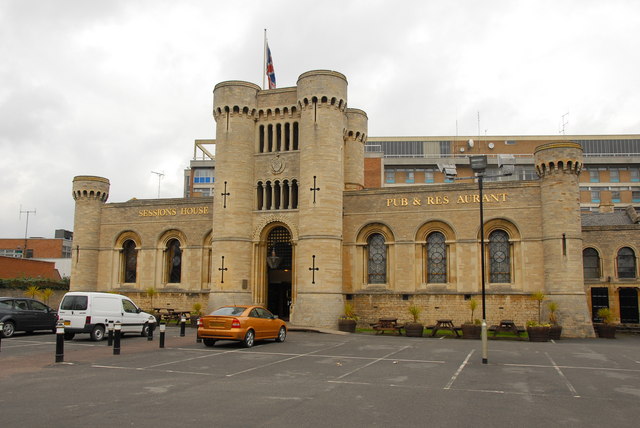
Policing Peterborough| Overview | Liberty Quarter Sessions | Before 1857 | Liberty Police | City Police | Combined Police | History written 1979 | Improvement Commissioners | Chief Officers | Premises | What's Missing? | Notes and Queries | Police Premises The Peterborough Lock-up There was a lock-up or cage in Peterborough which was in use by Parish Constables and the Improvement Act Constables before the introduction of the new police in 1857. This would have been used to temporarily secure a prisoner before he or she could be brought before a Magistrate. In 1837 the lock-up was at the Liberty Bridewell or House of Correction at the junction of Cumbergate and Exchange Street, under the jurisdiction of the Liberty Magistrates. The Inspector of Prisons, in his report for 1837, states "This is used as a Watch-house and lock-up House of Correction. It stands in a street, attached to other buildings, without any boundary wall and is very small and confined, badly ventilated and dark." (This entry from the Inspector's report is quoted by Peter Higginbotham "The Prison Website", https://www.theprison.org.uk/PeterboroughTB/ consulted 15 Oct 2025) It is not known whether the lock-up was elsewhere before or after 1837. It has been suggested that the old Bishop's Gaol at the Cathedral Gateway might, at one stage, have served this function. The Stamford Mercury, 31 January 1851, reported on a meeting of the Improvement Commissioners at which a letter from the Feoffees was read, consenting to build a lock up and station house near the Skin Market, under certain conditions, one of which was a rent to be paid of 7 per cent of the cost of erection. The Commissioners referred the matter to their watch committee for a plan and estimate. It is not known whether the Commissioners proceeded further with this. The Skin market was somewhere near the North entrance to St John's Church, part of what is now Cathedral Square. More promising is the Stamford Mercury on 25 August 1854 which carried a report on a poll for the election of Improvement Commissioners and mentioned that election papers could be obtained from "the lock-up house belonging to the said Commissioners situate in Cumbergate", which is clearly a further reference to the old Liberty Bridewell or House of Correction. The Liberty Gaol and House of Correction, Thorpe Road. An Act of Parliament obtained in 1840 permitted the building of a new Gaol for Peterborough and the Liberty Gaol was completed in 1844. Its cost.."upward of £8,000". It had accommodation for 28 males and 10 females "on the separate system" with cells for debtors and ample accommodation for the Governor and other officers. There was a Court House attached, with Courts for Petty and Quarter Sessions and there were also waiting rooms and a library. The Lord Paramount, Lord Exeter, who in 1795 had been indicted for allowing the previous Gaol building to fall into decay, subscribed £500 towards the cost and was thereby discharged of all dues and services respecting the new Gaol. The building was closed as a Gaol in 1878 as part of the plan to nationalise the prisons under the Prison Act 1877, and from then on, Peterborough prisoners had to be sent to Northampton or Cambridge. A police officer of the Liberty Force always lived on the premises at the Gaol from 1857, and an office was kept by the Liberty Police in the building right up to the time of the formation of the Combined Police Force in 1947. The Liberty Force used the cells from the gaol for their prisoners, but the City cells at Milton Street were used for persons arrested during the night time. The City also provided the Liberty police with an office at Milton Street (Report of Her Majesty's Inspectors of Constabulary 1876 for the Liberty of Peterborough Police). The Prisons Commissioners allowed cells at the former Peterborough Gaol to be used to house prisoners on remand until conviction or commitment (Peterborough Standard 1 June 1878 p6). A few years later a remand prisoner held in these cells committed suicide by hanging; the subsequent inquest shows a somewhat relaxed level of supervision of prisoners (Peterborough Standard 18 March 1882 p5) Exactly which part of the gaol complex was used by the Liberty Police has yet to be established. The image below, taken in 2010, shows the Old Session House (then a pub and restaurant) which stood at the front of the Liberty Gaol in Thorpe Road.
Peterborough Session House in 2010, photo by Julian Dowse, licensed for reuse under the Creative Commons Attribution-ShareAlike 2.0 license. The Old Infirmary, Milton Street. There is some uncertainty about the accommodation used by the Liberty force initially. Some histories suggest that the force was accommodated in the gaol, but there is other evidence that the Milton Street building became available in 1856 and was leased shortly after by the Liberty police. This building was originally erected as a dwelling house, but in 1822 it was taken over as the "Infirmary" and maintained from monies originally subscribed from the "Stock Fund" of the Volunteer Defence Corps when they were disbanded after the Napoleonic Wars. The "Infirmary" later moved to the building in Priestgate, which is now the Peterborough Museum. Her Majesty's Inspector of Constabulary in his first report in 1857 states "City of Peterborough and Liberty..... The station and lock-up House is lately fitted up and and is commodious and good". Then in 1858 "The station house is very superior, accommodation being found for seven constables and a Superintendent" and "the office work is done at Northampton". In the City, "night duty is undertaken by the Inspector and four Constables". In 1860 HMIC reported, "The Station House is very complete". None of these reports mention the Gaol With the granting of the Charter of Incorporation to the City in 1874, and the formation of a separate Police Force for the City, the Headquarters of the City Force was established in the old infirmary building in Milton Street and the Liberty Force was based at the old Gaol.
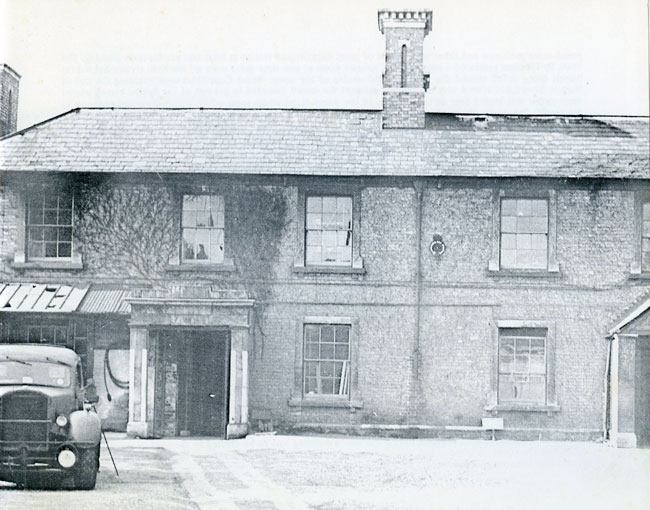
Milton Street Police Station But even at that time the City Council were not at all satisfied with the building and when they were considering the proposed agreement for the tenancy initially it was unanimously resolved that in view of the dilapidated state of the building, the Watch Committee recommend that the draft agreement for the tenancy be not approved. However, the Force moved into the building which was used both as a Headquarters and as a residence for the Head Constable. Twenty-three years later, the Head Constable reported to the Police Authority on the accommodation at the Police Station which he stated had become inadequate. That was in 1897, but in spite of the growth of the town and the extra work of the police, the building was still occupied as a Police Headquarters until 1949. Some years previously in 1942, the necessity for additional space had made it essential for the Chief Constable to move out, and the part of the building previously occupied by him was converted into offices. A year or so later, additional cells had to be added at the rear of the building to accommodate female prisoners, for whom previously there had been no separate accommodation. Two of the existing cells in the main building were declared by the Medical Officer of Health to be quite unfit for occupancy by human beings and to accommodate various extra stores and facilities required during the War, a building had to be erected in the yard between the main offices and the street. A wooden hut was built in the small remaining space in the front yard to provide a place where the men could parade for their duties. A few years later, one officer had his leg slip through the floor of an upstairs store, fortunately without serious injury, and very shortly afterwards the one decent sized room in the building which was used as a C.I.D. Office, also had a floor give way under the weight of one of the burlier plain clothes men and the Building Inspector declared that room to be dangerous and unusable. The Detective Inspector of a few years later had the dangerous state of the building brought home to him rather sharply one morning when a large and weighty piece of the stonework of the front porchway fell with a resounding crash just behind him. The blueness of the atmosphere immediately after this unnerving incident was not entirely due to the usually well stoked pipe of the officer concerned. The building was totally unfit for its purpose as the restricted accommodation allowed for no proper facilities for the members of the Force either to wash or to cook or partake of their refreshments and the accommodation for the administrative and operational work of the Force was entirely inadequate. In November 1943, because of the increased Motor Patrol section, additional garages were rented on a weekly tenancy from Williamson's, Sweet Manufacturers. Their factory faced on to Westgate opposite Cromwell Road, but went through the back on to Milton Street. They also had a yard adjoining the west side of the Police Station site which they used for garaging their own transport and part of which was made available for police vehicles. In May 1949 the Combined Force finally vacated the Milton Street building. (Peterborough Standard 13 May 1949) The Old Guildhall, Church Street Losing a city centre presence following the move from Milton Street, the Force set up an enquiry office in a building, now demolished, belonging to the Borough Council which stood between St John's Church and the 17th Century Market Hall. Probable dates of use 1949-57.
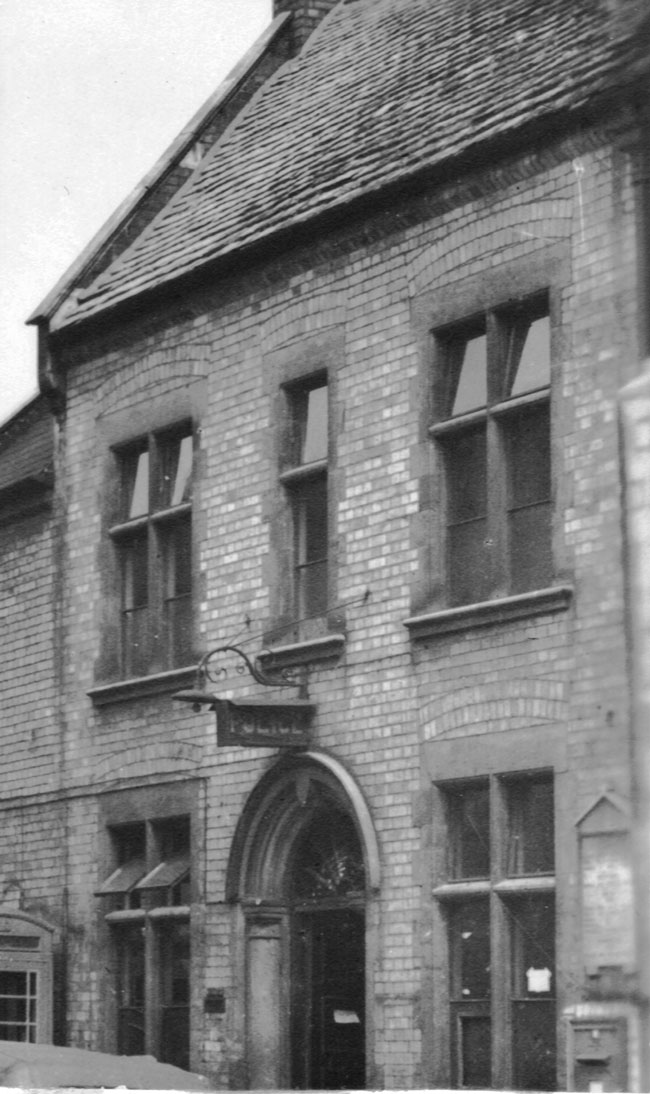
Police Enquiry Office Cowgate 1950s
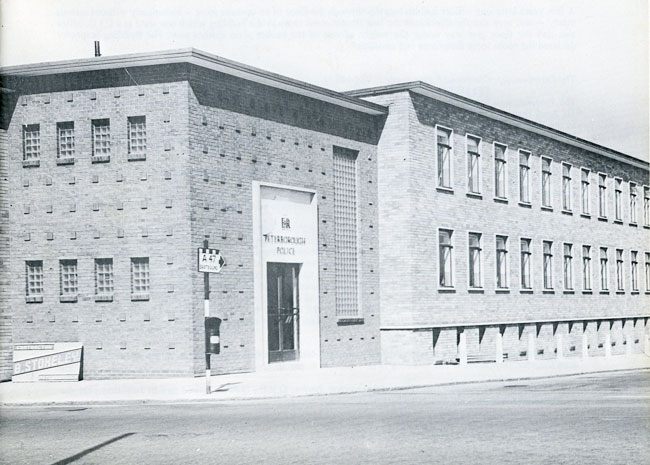
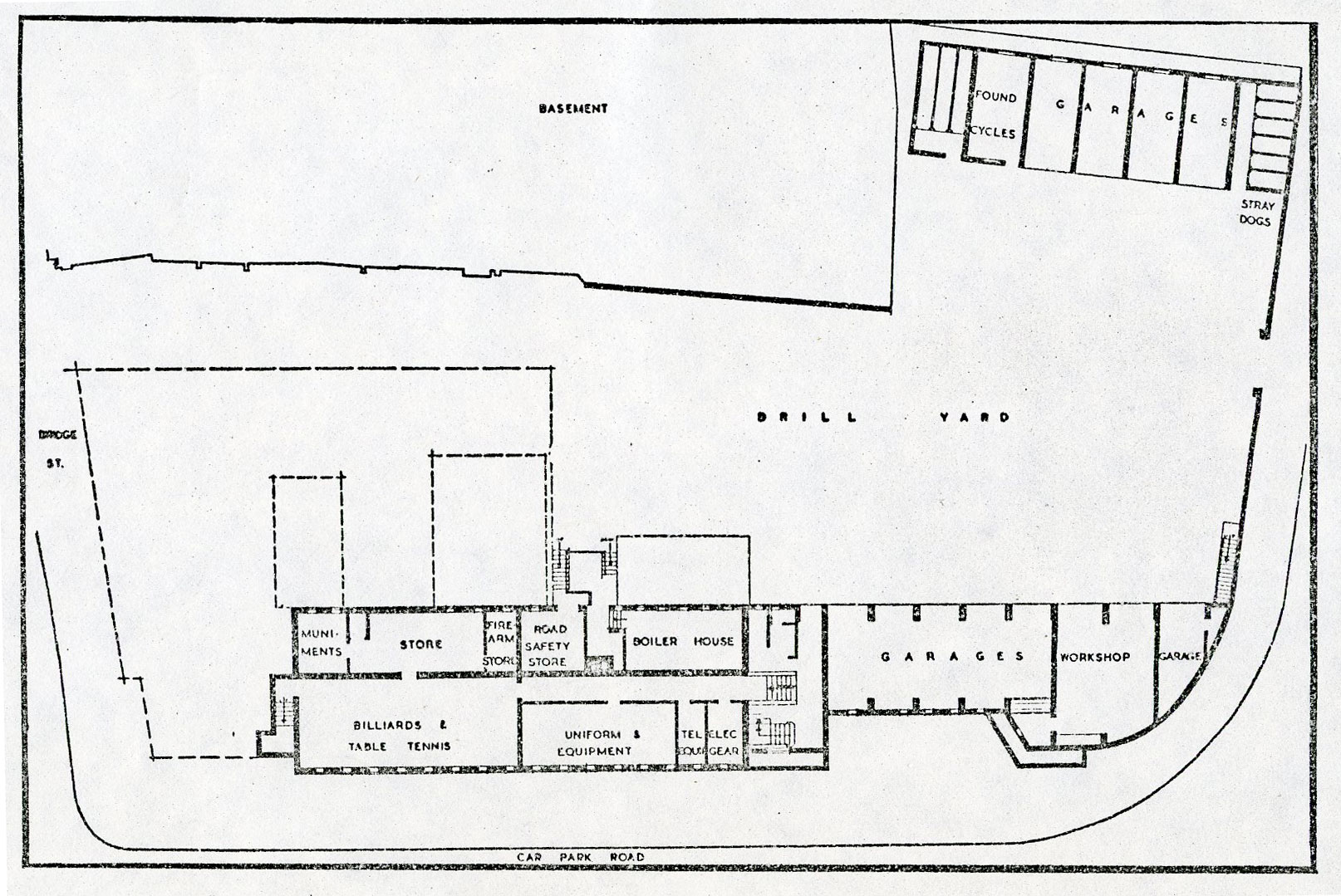
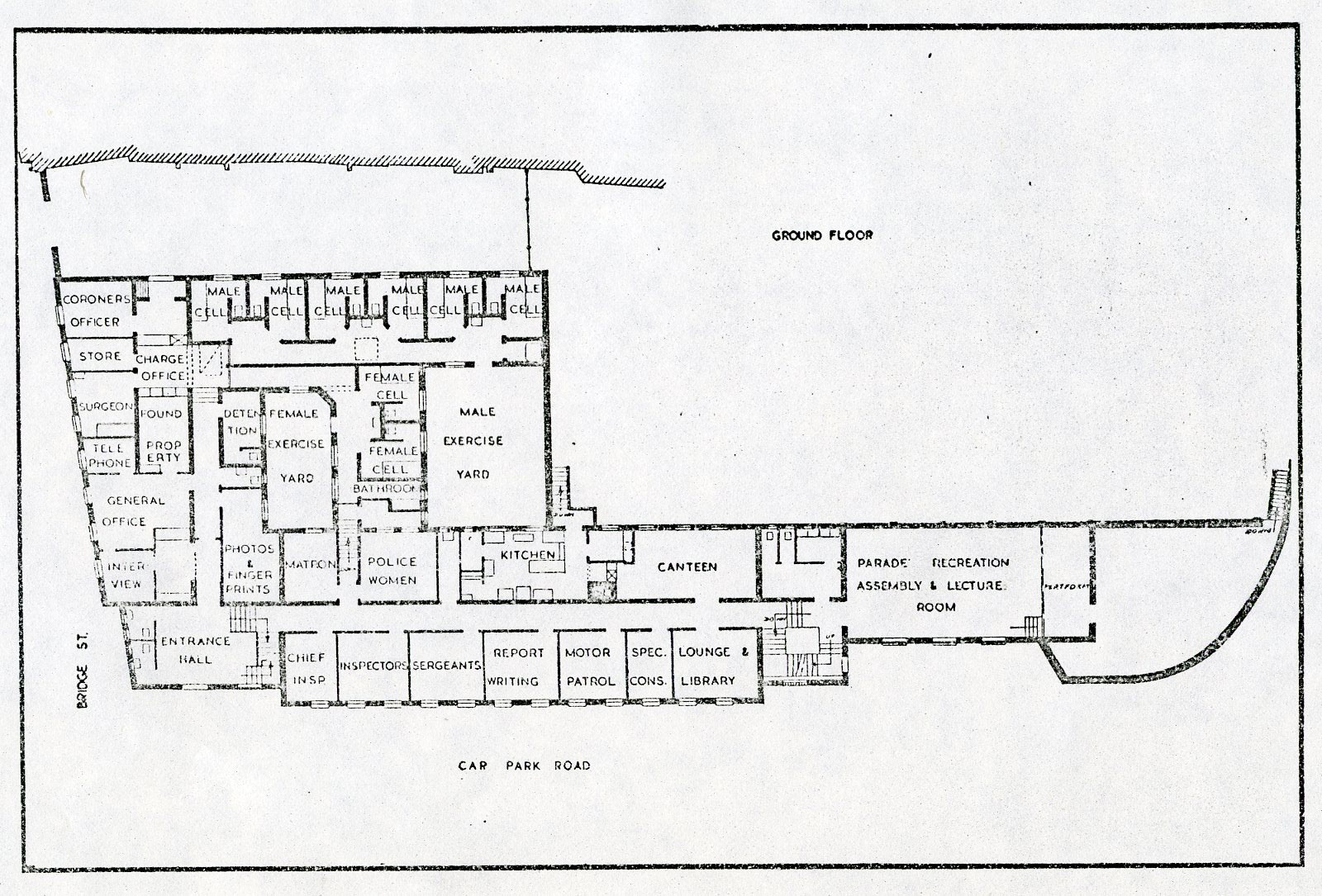
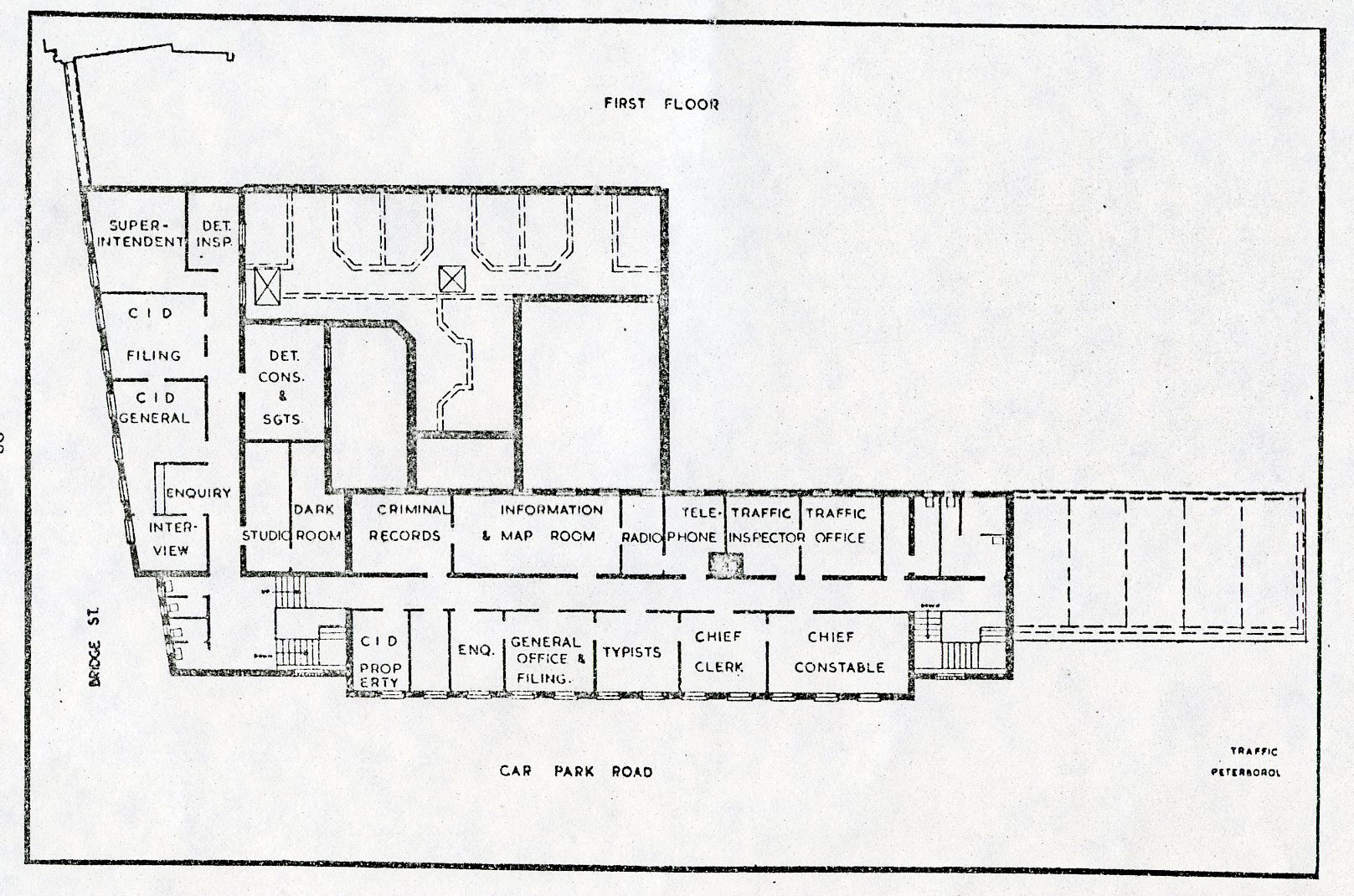
During the intervening years consideration had been given to the question of providing a new Headquarters. Tentative plans were made for offices to be provided in the Council buildings when the premises in Broadway were taken over in 1921. After that, consideration was given to various premises including St. Peter's College, a large house on Lincoln Road in Boroughbury, a site on the Bishop's Garden near the junction of St. Peter's Road and Bishop's Road, and eventually in the middle 1930's the site in Bridge Street adjoining the Embankment Road was purchased for the purpose. The Guardroom, Westwood Aerodrome By 1948 the position was becoming serious. The increasing area of the City of Peterborough which was being built up and the extensions in the industrial and business areas of he City, together with the increase in crime which was a national feature, and the increasing traffic problems, the work of the Police was becoming more and more complicated and demanded new measures to meet the situation. It was impossible to bring these into operation until some more suitable accommodation was found, and in 1949 after a good deal of protracted negotiations, the Guardroom and part of the old Sergeants' Mess and various other buildings on the Westwood Aerodrome site were made available as a temporary measure. The occupation of these buildings allowed a certain amount of re-organisation to take place, but at the best the dispersal of the work of the Force among so many buildings could only be regarded as a temporary improvement and plans for the new Station in Bridge Street were pressed ahead. (Image needed) Bridge Street Police Station Finally the Force was to be provided with a modern bespoke headquarters. Plans had been drawn up and with the Home Office pressing the need for a new building right up to the time of Dunkirk in 1940, arrangements were in hand for the building to be provided. However, the serious turn of events in that year inevitably led to a further postponement and of course the difficult building conditions in the years following the Second World War made it impossible to make any immediate progress, although the scheme was given priority by the Home Office. The new Headquarters was officially opened in 1957. In 1965 Bridge Street was no longer a Force HQ, but a Divisional Headquarters for the Peterborough or E Division of the newly amalgamated Mid Anglia Constabulary. Later Bridge Street Station was to become a sub divisional station when, in 1979, a new larger Divisional Station was opened at Thorpe Wood. The Bridge Street Station closed in 2015, was later sold, and demolition starting in 2019 to re-use the site for a hotel. The following paragraphs are from a booklet published by the Force in 1957 describing the Bridge Street Station. The links will open plans of each floor.:
Bridge Street Station on completion 1957 with the builder's sign board outside Police Boxes In the days before the introduction of personal radios, The Peterborough Combined Police built eight police boxes around the town. These simple single story brick buildings provided somewhere for beat constables to take their refreshments, write reports and interview witnesses. They were linked by telephone to HQ and a flashing light could alert a nearby constable to the need to telephone HQ. Boxes would also be used as pre-arranged conference points where a Sergeant or Inspector could meet an officer. Locations of these boxes are not currently known. One of the last surviving was at Queens Walk London Rd junction, another was at Lincoln Road near Maskew Avenue. (add image)
|
|
This page was last modified: 15 October 2025, 15:25
This site is powered by Web Wiz Green Hosting. We have been using their services for many years and are more than happy to recommend them to you. www.arumgo.com is a non-commercial web site currently containing material for police historians or those interested in local and family history. The site name was chosen for a place intended to be a shoe-box in which to store interesting things that make life in Silicon Fen of the 21st Century such arumgo 'Well, Sam,' said Mr. Pickwick, 'I intend to record all the interesting things we encounter in this journal'. 'That's rayther a rum go Sir,' replied Sam. |